
Parts of Raigad, Ratnagiri districts in the coastal Konkan region and Kolhapur district in western Maharashtra, have been worst affected by the floods. Besides that, heavy rains have been pounding parts of Satara district.

January inflation may undershoot RBI's 6% target.

India's factory output climbed 22.4 per cent in March, benefiting from the base effect of the lockdown-marred month a year back as well as a turnaround in the manufacturing sector, while retail inflation slipped to a three-month low of 4.29 per cent in April. The high positive annual growth in the index of industrial production (IIP) in March 2021 came on back of a contraction of (-)0.9 per cent and (-)3.4 per cent in January and February 2021 respectively, according to the data released by the National Statistical Office (NSO) on Wednesday. This turnaround was led by recovery in the mining, manufacturing and electricity sectors.

Insufficient rainfall will have a negative impact on the economy.

After a delayed start, the monsoon is advancing steadily.

A diet rich in proteins, vitamins and minerals is very crucial in maintaining and boosting immunity.

Intense showers battered Chennai and other northern regions of Tamil Nadu on Thursday while the depression over Bay of Bengal crossed the coast by evening.

'The selling in India may emerge as soon as the RBI reverses its interest rate stance.'
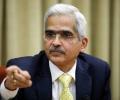
RBI governor Das flags growth slowdown, deputy raises alarm on inflation

Twenty suspended Rajya Sabha members on Wednesday started a 50-hour relay protest inside the Parliament complex, with sources saying the Opposition declined the chairman's offer that they express regret over their members' behaviour in the House to get the suspension revoked.

Senior officials, including those from a central team, were present during the night-long operation and a close vigil is being maintained on further movement of locusts, Katiyar said. Two fire brigade vehicles loaded with insecticide had been deployed in all four Jhansi tehsils besides six vehicles were kept ready at the district headquarter. Ten municipal employees with two insecticide spraying machines were posted in every block.

Central Statistics Office has come out with GVA to measure growth.

The drought of 2009 still haunts the India Meteorological Department.

Unless public health is prioritised over swift re-opening, the chances are that a third wave will hit India sooner than we would like.

The Reserve Bank's rate-setting panel, Monetary Policy Committee (MPC), began its three-day deliberations on Wednesday amid expectations of a status quo on benchmark rate mainly on account of uncertainty over the impact of the second wave of COVID-19 pandemic. Moreover, the fears of firming inflation may also refrain the MPC from tinkering with the interest rate in its bi-monthly monetary policy outcome to be announced on Friday. The RBI had kept key interest rates unchanged at the last MPC meeting held in April.

Wholesale price-based inflation eased to a nine-month low of 4.68 per cent in February, while retail inflation slowed to a 25-month low of 8.1 per cent.

'Due to severe rains and heavy cross winds, arrivals at #AAI Chennai Airport will remain suspended from 1315 hrs to 1800 hrs, today. Departures will continue. The decision has been taken considering the safety aspect of passengers and severity of wind,' the Chennai Airport tweeted.

"The main risk stems from the uncertainty surrounding the outcome of the south west monsoon in view of the rising probability of an El Nio event around July-August, and its implications for food inflation," RBI said, as it kept the status quo on key interest rate for the third time in a row.

Goyal said India has been recognised as brightest spot in the world in last five years.

For the past one year, an overwhelming number of farmers have been camping at the Singhu border area of Delhi, braving by turns biting cold, monsoon rains, COVID pandemic scare and also accusations of 'creating obstructions,' but the spirt of solidarity has allowed them to soldier on against all odds.

Prices of perishable items could spike in the near term.

Though agriculture ministry officials are confident of a bumper harvest due to record increase in kharif acreage, experts and farmers said the on-ground situation in some crops is not that encouraging as incessant rains since the last few weeks and pest attack could impact the final yield.
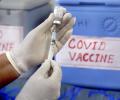
Maintaining a rapid pace of the vaccination drive and quickly bridging healthcare infrastructure gaps across both urban and rural areas would emerge as the most sustainable stimulus for durable recovery of the Indian economy, says a report by the department of economic affairs.
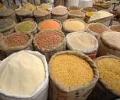
Concerned over possible fall in pulses production due to poor monsoon so far, the government is considering reintroducing its scheme to sell subsidised pulses through ration shops to give relief to common man from price rise.
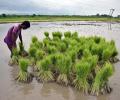
The government on Wednesday raised the minimum support price (MSP) of paddy marginally by Rs 72 per quintal to Rs 1,940 per quintal for the 2021-22 crop year, while the rates of pulses, oilseeds and cereals were hiked substantially. Among the commercial crops, the MSP of cotton was increased by Rs 211 per quintal to Rs 5,726 for medium staple variety, and by Rs 200 per quintal to Rs 6,025 for long-staple variety of cotton for the 2021-22 crop year (July-June). The decision taken by the Cabinet headed by Prime Minister Narendra Modi will help farmers take a call on which kharif (summer) crop to grow as sowing picks with the spread of the Southwest monsoon in the coming weeks.

Given that there are hundreds of players in the shadow banking space, it's hard to make a credible estimate of potential NPAs. That creates more scope for panic, says Devangshu Datta.
The Reserve Bank's growth projection for next financial year is lower than 8-8.5 per cent projected by the finance ministry in the recent Economic Survey which was tabled in Parliament on January 31. Unveiling the bi-monthly policy, RBI governor Shaktikanta Das said, "Recovery in domestic economic activity is yet to be broad-based, as private consumption and contact-intensive services remain below pre-pandemic levels."
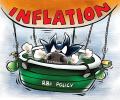
The Reserve Bank of India on Friday raised the retail inflation forecast for 2021-22 to 5.7 per cent due to supply side constraints, high crude oil and raw materials cost. The RBI in June had pegged the retail inflation estimate at 5.1 per cent for the current financial year. The RBI has the mandate to keep inflation in a band of 2-4 per cent, with a tolerance level of 2 per cent on either side.
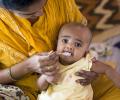
It is extremely crucial to keep your little one hydrated at all times, as an extended span of dehydration can lead to fatal outcomes, advises pediatrician Dr Satish Deopujari.
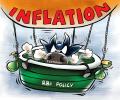
Currently, the retail inflation is well below the RBI's comfort level. The government has asked the central bank to keep inflation in the range of 4 per cent.
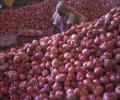
There was a delay in sowing of kharif onion because of late arrival of monsoon and later floods in many states damaged the crop.

Over to the government how they manage the uncertainty of monsoon and revive spending in order to entice RBI for another round of rate cuts

With two more deaths, the fatalities due to flood this year has gone up to 18.

'These accusations of my film being a copy only makes our chances at the Academy harder.'

While everyone raves about the joys of the monsoons, Keya Sarkar is not as enthusiastic.

Section 144 of CrPC, prohibiting assembly of five or more people at one spot, will be in force during the period, Thackeray had said, but refrained from terming the new curbs as a lockdown.
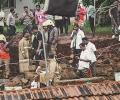
A portion of the 15-foot tall private compound wall, totally wet due to heavy rains lashing the area for the past few days, fell on the adjoining tiled-roof houses in Nadur village.

Experts feel oil prices will remain volatile with an upward bias.
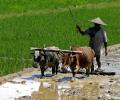
55% of cultivable land still doesn't come under irrigation.

The tribal leader, India's youngest president at 64 and the first to be born after Independence, took oath of office in the name of god to 'preserve, protect and defend the Constitution and the law'.
